
Crush it
where it lies.
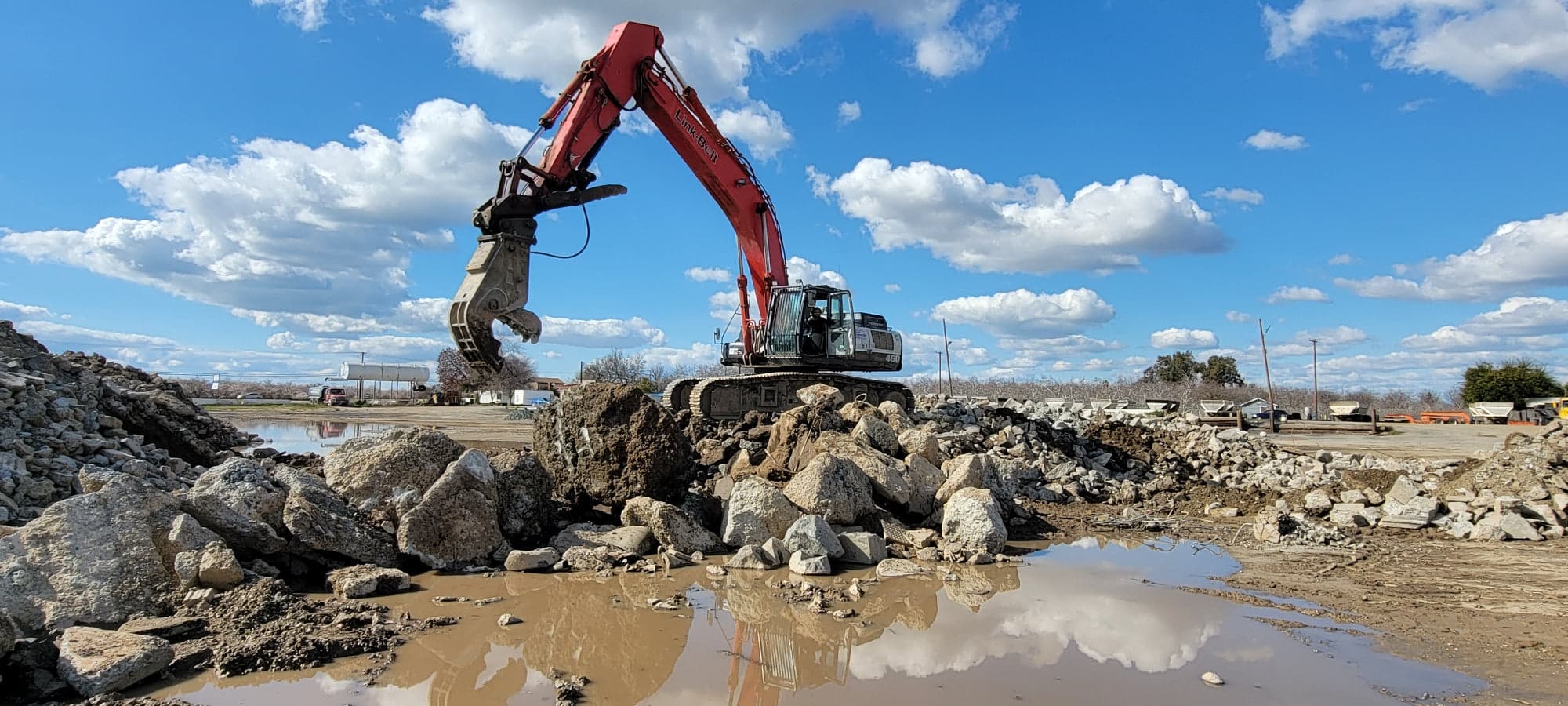
The crusher comes to the job. Broken concrete, old asphalt and oversized rock get turned into usable base right where they sit — so you never pay to haul spoil off, and never pay to buy base and haul it back in.
- Where we crush
- On site
- Paid truck moves
- 2 → 0
- Counties covered
- 3
- Job pricing
- Call
You pay for demo
twice.
Every yard of broken concrete that leaves the job is a truck you paid for. Every yard of base rock that comes back is a truck you paid for again — plus the rock itself. Crushing on site deletes both moves.
| Line item | Haul it off | Crush on site |
|---|---|---|
| Loaded trips off the job | One per truckload of spoil | None |
| Dump and tipping fees | Yours, by the ton | None |
| Base rock purchased | Every ton the job needs | Only what you come up short |
| Trips hauling base back in | One per truckload of rock | None |
| What's on the ground at the end | An empty pad and two invoices | A stockpile you already owned |
The only material you end up buying is what the job comes up short. On a demo of any size, that difference is usually the whole margin.
How a crushing job runs
Five steps, start to finish. Most jobs are set up, run and off the site without a single load leaving through the gate.
- 01
Walk the pile
We look at what you have and where it sits — how much of it, how big the pieces are, and whether there is room to set the crusher and turn a loader around.
- 02
Move in
The crusher and the loading iron come to your site. One move in and one move out, instead of a truck leaving the gate every twenty minutes for a week.
- 03
Feed it
The loader feeds concrete, asphalt and oversized rock into the jaw. Rebar, wire and trash come out of the feed before it goes in, not after.
- 04
Set the size
The crusher setting decides the product. Tell us what it is going under — a building pad, an access road, a pond bank — and we set it to suit the job.
- 05
Stockpile it
The finished material piles up where you are going to use it, ready to place and compact. Nothing leaves the job and nothing gets bought back.
- Left over
Make more product than the job needs and we will haul the surplus — to another one of your sites, or back to the yard in Porterville.
See the fleet
What goes through it
If it was rock before somebody poured it, it can usually be rock again.
Demolition concrete
Slabs, footings, curb and gutter, foundation walls. Steel comes out on the way into the jaw.
Broken asphalt
Old lot and road surface. Crushed down it makes a hard, cheap driving surface that keeps the dust down.
Oversized rock
Boulders and pit run too big to place or compact. Brought down to a size that will actually key together.
Site spoil and rubble
Mixed material off a demo. What can be crushed gets crushed, and we haul what can't.
Not sure what
you have?
Send a couple of photos of the pile and the access road. We will tell you straight whether the volume is worth setting up on, and what it would make.
Crushing is quoted per job — volume, feed size and how long we are on the ground all move the number.
The crusher working
Feed goes in one end. Base comes out the other and stacks where you need it.
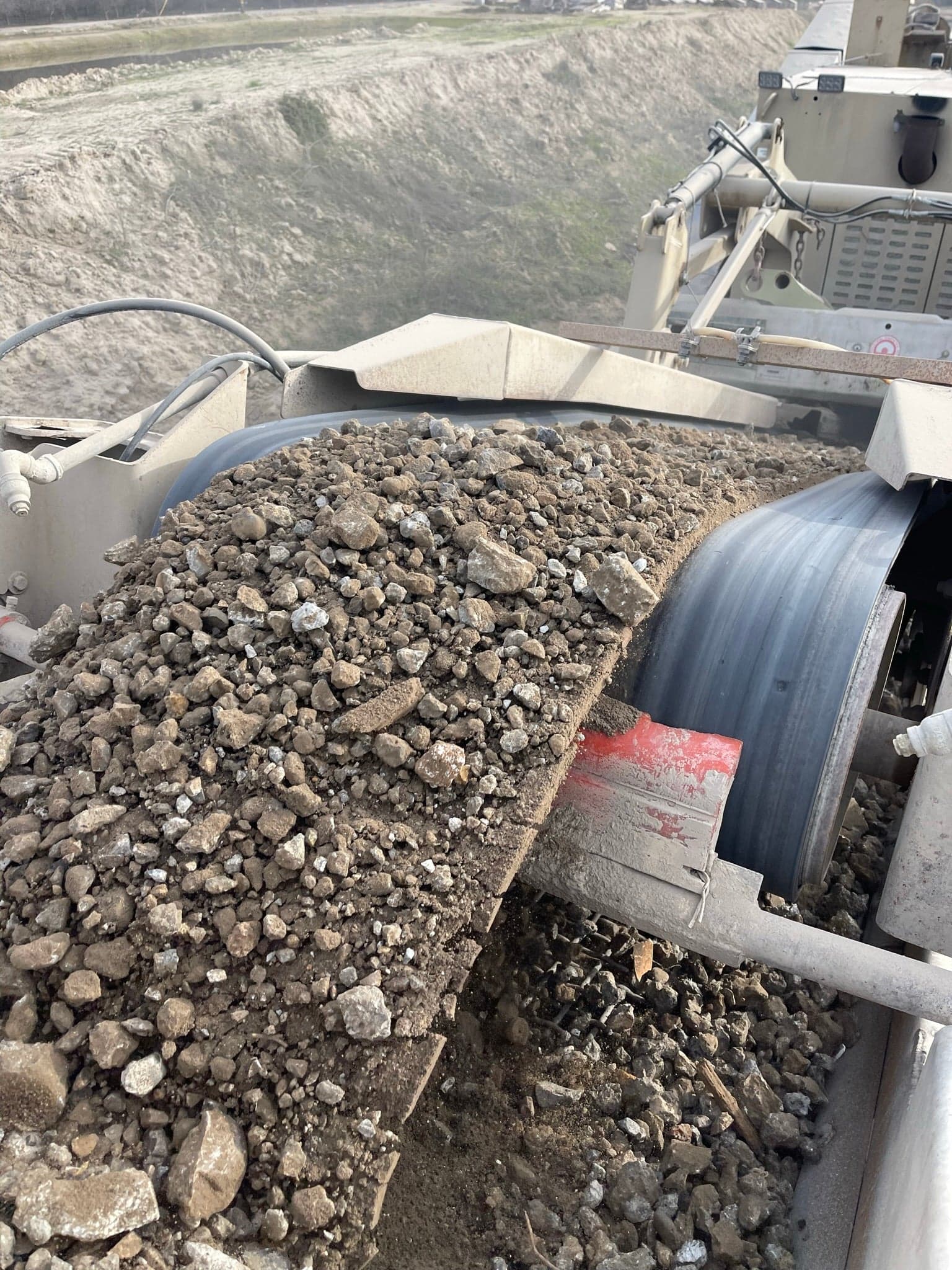
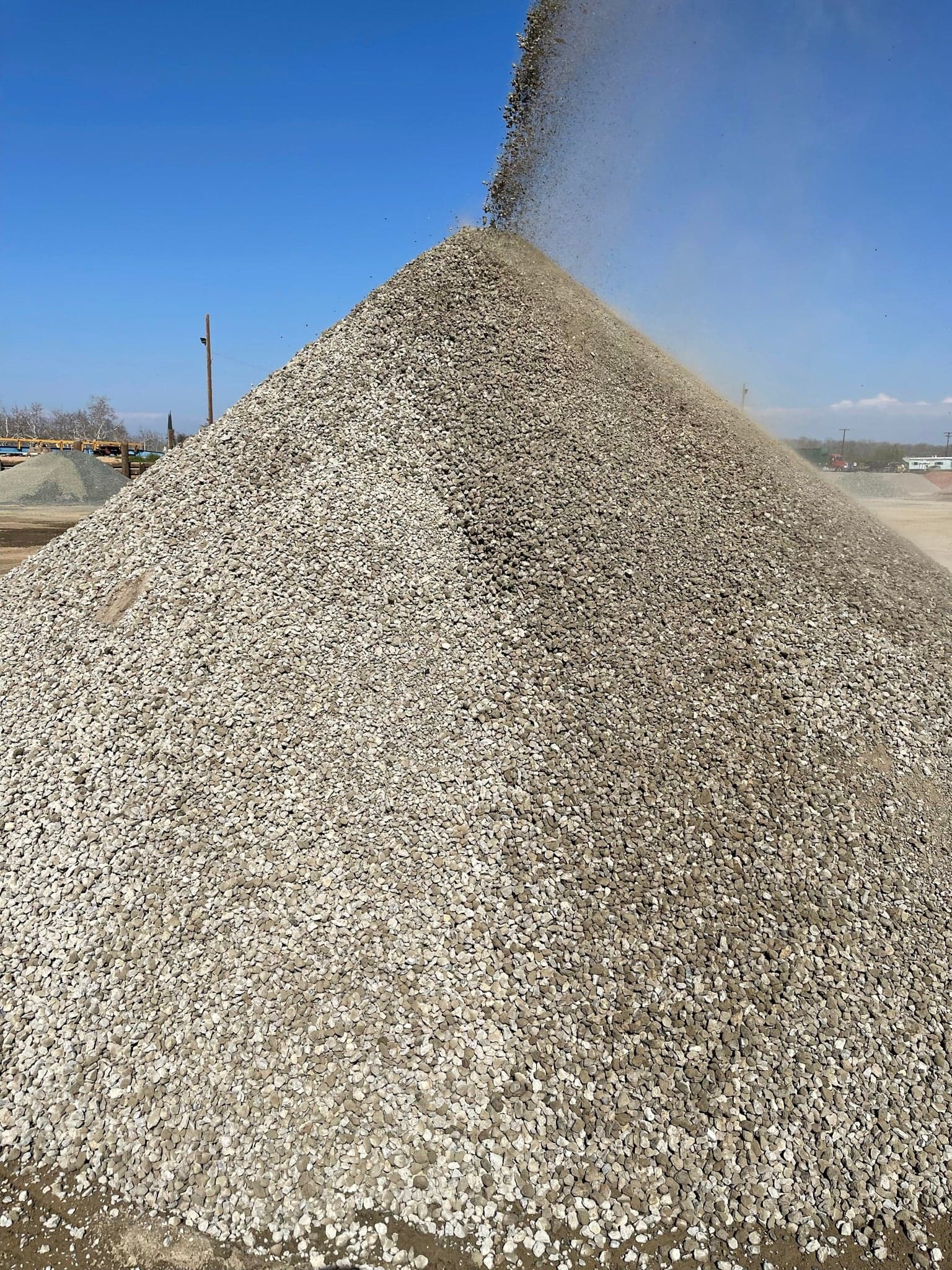
Video of the crusher running is being re-cut for the web.
Tell us what’s on the ground.
Give us the location, a rough volume and what it is. We will tell you whether crushing it beats hauling it — and if it doesn’t, we will haul it.