
What it does
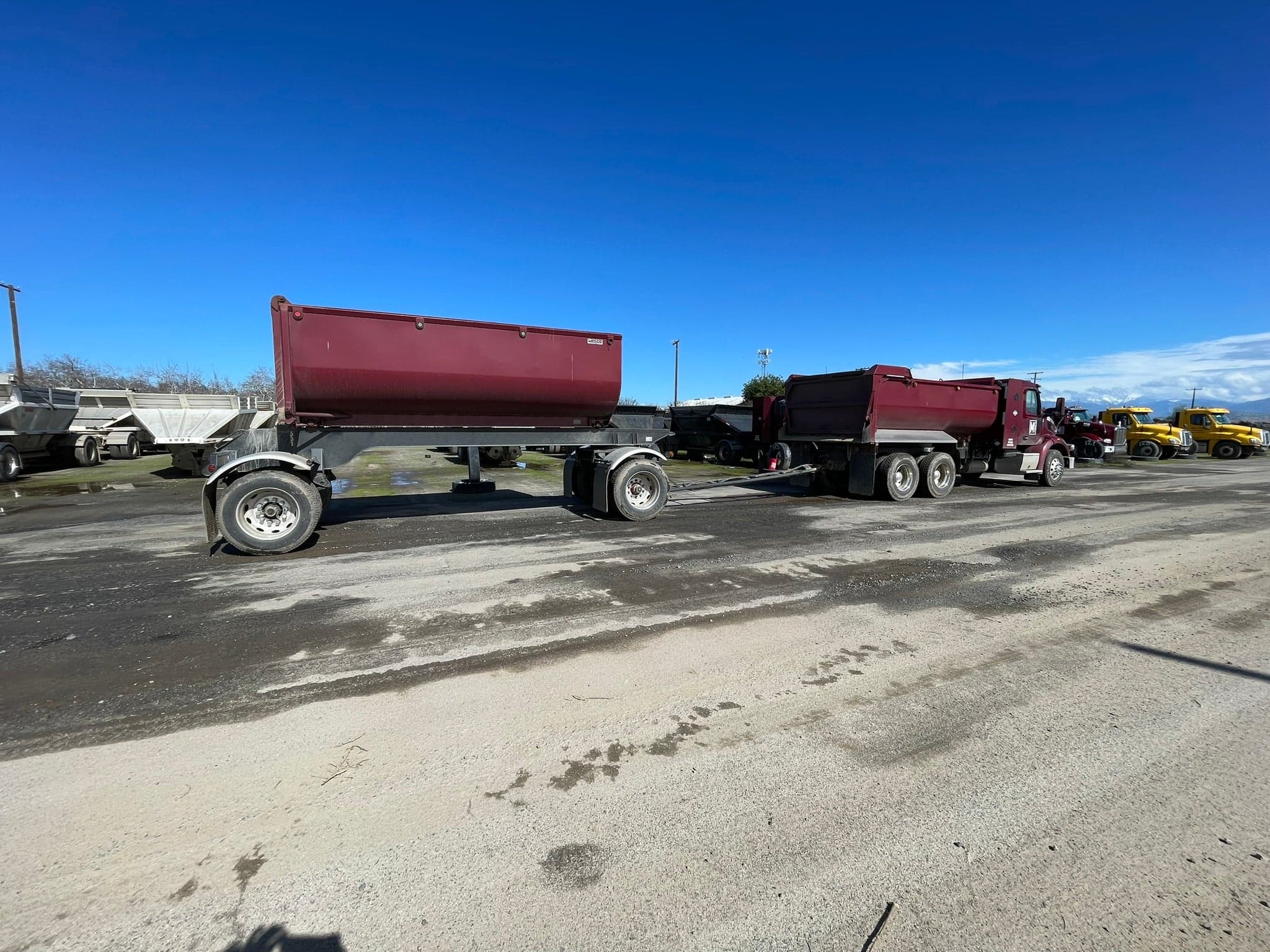
A transfer truck carries a second "can" on a trailer behind it. At the job the truck backs up to the rails on the trailer, which act like train tracks guiding the can into the dump bed. Once the can is locked down it dumps like a standard truck — then you reverse the steps and roll again. The result is more material per trip without giving up access to tight sites.
Best for
- Paving parking lots
- Aggregate and asphalt hauling
- Tight or urban job sites
- Runs 20+ minutes from the pit
Spec sheet
Loads are dispatched out of Porterville. Tell us the material and the address and we will put the right truck on it.
Key benefits
What this configuration does better than the rest of the fleet.
- 01
High Payload Capacity
hauls more material per trip than a standard dump truck
- 02
Maneuverable Design
shorter wheelbase reaches tight job sites and urban areas
- 03
Versatile Applications
paving, aggregates, asphalt, general construction material
- 04
Cost-Effective on Longer Runs
fewer total trips on jobs 20+ minutes from the pit or plant
- 05
Local Service
Porterville, Tulare, Bakersfield, Fresno and surrounding areas
How it works
The sequence a driver runs on every load.
- Step 01
Normal
The truck and trailer are hooked up normal, with the second can riding on the trailer behind the dump bed.
- Step 02
Ready to Transfer
The truck backs up to the rails on the trailer. They act like train tracks, guiding the can into the dump bed.
- Step 03
Locked Down
The can is locked down in the bed and ready to dump.
- Step 04
Dump
Dump it, then reverse every step and the truck is ready to roll again.
Put this truck on your job.
Pick the material and the tonnage. The quote builder prices the haul with Transfer Trucks already selected.